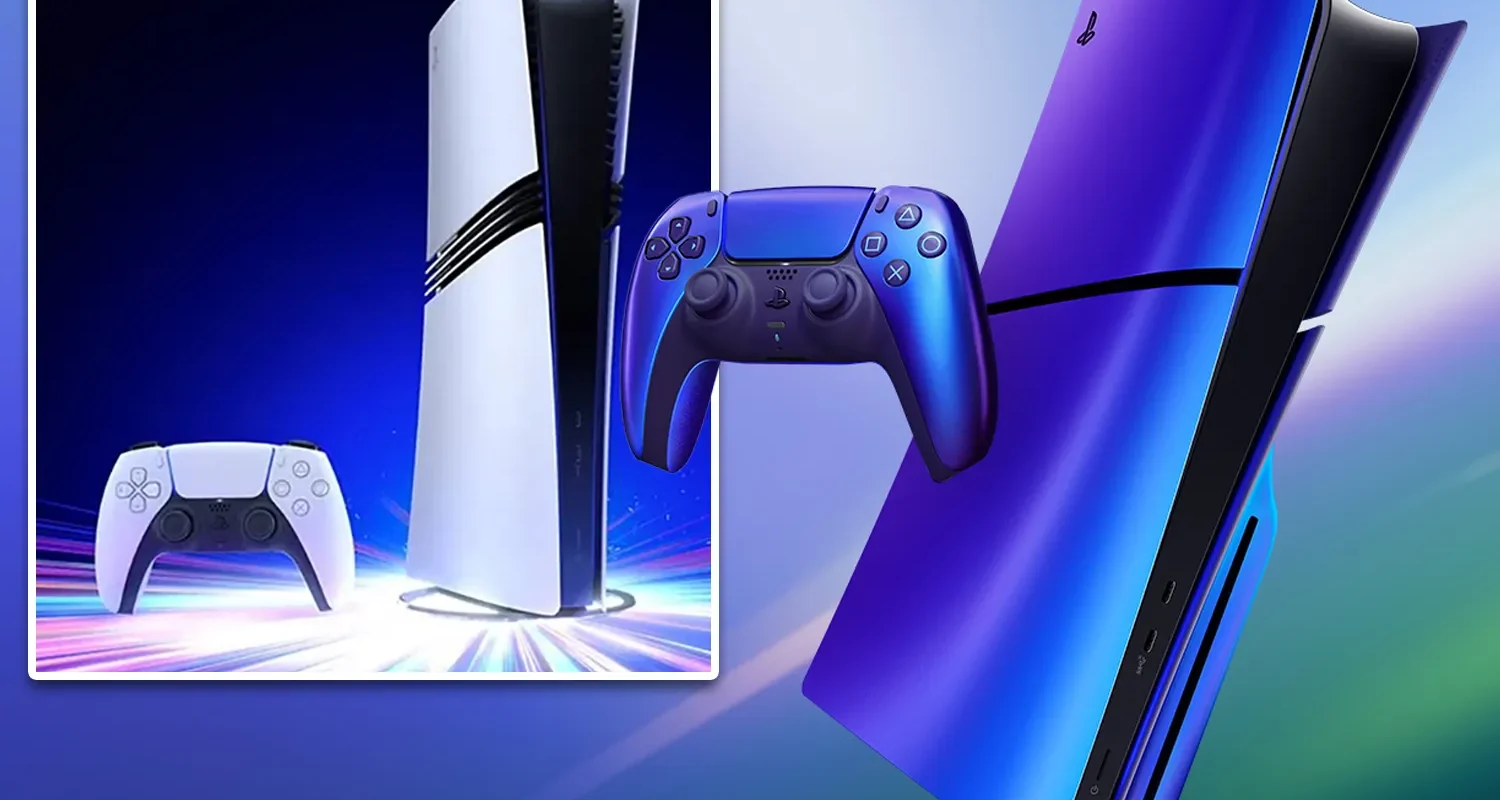
Sony’s next generation of hardware is generating serious buzz — and the leaked specs are genuinely impressive. Industry insider KeplerL2 has stated that the PlayStation 6’s long-rumored handheld model will outperform the Xbox Series S, with a GPU that’s “a bit ahead” of Microsoft’s home console and that “massively” outpaces the Series S in ray tracing and path tracing performance. The handheld’s updated PSSR upscaling is also claimed to be better than Nvidia’s current market-leading DLSS 4.5 technology — which, if true, would be a remarkable achievement for a portable device.
None of this is officially confirmed by Sony. But between multiple credible leakers, developer-facing backend changes, and the historical console cycle timeline, the picture of PlayStation’s next generation is becoming clearer by the month. Here’s everything we know.
⚠️ Disclaimer: All specifications and timelines in this article are based on leaks and insider reports. Sony has not officially announced the PlayStation 6 or any PS6 handheld device. Treat everything here as rumour until confirmed.
🎬 PS6 Handheld — Leaked Specs Breakdown Video
Watch the full leaked specs breakdown for the PS6 handheld below, covering the hardware internals, performance comparisons to the Nintendo Switch 2 and Xbox Series S, and what Sony’s next generation could look like.
📺 Video via YouTube. All spec details are based on insider reports and leaks — not official Sony announcements.
📋 What’s in This Article
- The Leaked PS6 Handheld Specs — Full Breakdown
- PS6 Handheld vs Nintendo Switch 2 vs Xbox Series S
- PSSR Upscaling — Beating DLSS 4.5?
- The “Power Saver Mode” Trojan Horse Theory
- PS6 Home Console Specs
- When Will the PS6 Launch?
- PS6 Handheld FAQ
🔬 The Leaked PS6 Handheld Specs — Full Breakdown
The PS6 handheld is codenamed “Project Canis” internally. Based on leaks from hardware insider Moore’s Law Is Dead and NeoGAF insider KeplerL2, here are the reported specifications:
| Component | PS6 Handheld (Leaked) |
|---|---|
| Codename | Project Canis |
| CPU | 6 cores — 4x AMD Zen 6c + 2x Zen 6 LP |
| GPU | 16 RDNA 5 Compute Units |
| Process Node | TSMC 3nm |
| Memory | 24GB LPDDR5X |
| Memory Bus | 192-bit |
| TDP (Power) | ~15W target (portable mode) |
| Upscaling | Updated PSSR (claimed to exceed DLSS 4.5) |
| Connectivity | USB-C video input, expandable storage |
| Touchscreen | Yes (reported) |
| Backwards Compatibility | PS4 and PS5 games (reported) |
The chip size is reported to be less than half the size of the full PS6 home console chip — consistent with Sony’s strategy of building a power-efficient portable that shares the same architecture as its home console counterpart, similar to how Nintendo’s Switch 2 uses a scaled-down version of its docked hardware.
⚔️ PS6 Handheld vs Nintendo Switch 2 vs Xbox Series S
The leaked specs paint a picture of a handheld that punches well above what we’ve seen from portable gaming hardware before. Here’s how it stacks up against its most likely competitors:
| Spec | PS6 Handheld (Leaked) | Nintendo Switch 2 | Xbox Series S |
|---|---|---|---|
| CPU | AMD Zen 6 (6 cores) | Custom ARM | AMD Zen 2 (8 cores) |
| GPU Architecture | AMD RDNA 5 | Nvidia custom | AMD RDNA 2 |
| RAM | 24GB LPDDR5X | 12GB LPDDR5X | 10GB GDDR6 |
| Upscaling Tech | Updated PSSR | DLSS | AMD FSR |
| Ray Tracing | Massively ahead (per leak) | Limited | Basic support |
| Form Factor | Handheld / Dockable (rumored) | Handheld / Dockable | Home console |
According to Moore’s Law Is Dead, even in portable handheld mode, the PS6 handheld would still be almost twice as fast as the Nintendo Switch 2 in docked mode — a staggering gap if accurate. The Xbox Series S comparison is equally striking, with the PS6 handheld reportedly outpacing it specifically in ray tracing and path tracing, the two most demanding visual workloads in modern gaming.
📈 PSSR Upscaling — Beating DLSS 4.5?
One of the most eyebrow-raising claims in the leak is that the PS6 handheld’s updated PSSR (PlayStation Spectral Super Resolution) upscaling technology will outperform Nvidia’s DLSS 4.5 — currently considered the industry gold standard for AI-driven image upscaling.
PSSR debuted with the PS5 Pro in late 2024 and was already competitive with DLSS 3. An updated version purpose-built for the PS6 generation — benefiting from two more years of machine learning refinement and AMD’s next-generation silicon — could plausibly close the gap and exceed current DLSS capabilities, especially since Nvidia’s DLSS advances are typically tied to new GPU generations.
Why does this matter for a handheld? Because the entire performance equation for portable devices is built around upscaling. A handheld running games at a lower internal resolution and then upscaling to a sharp output is exactly how the Switch 2 competes — and if Sony’s PSSR is genuinely superior, the PS6 handheld could deliver visual quality that far exceeds its raw compute numbers on paper.
🕵️ The “Power Saver Mode” Trojan Horse Theory
One of the more intriguing pieces of evidence that the PS6 handheld is closer than people think comes from an unexpected place: a PS5 developer requirement.
According to YouTube channel Moore’s Law Is Dead, Sony has been quietly asking developers to optimize their PS5 games for the console’s “Power Saver Mode” — a mode that reduces performance and power draw. On the surface, this sounds like a battery-saving feature. But Moore’s Law Is Dead believes it’s something far more significant.
Their sources say the internal workings of Power Saver Mode directly match the previously leaked specs for the PS6 handheld. In other words, Sony may be using PS5 Power Saver Mode as a covert compatibility layer — getting developers to unknowingly optimize their games for the handheld’s performance profile right now, before the device is even announced.
The channel also reports that Sony is building a system called “PlayGo” — an equivalent to Xbox’s Smart Delivery — that allows players to download hardware-specific versions of cross-generation games. Crucially, PS5’s Power Saver Mode is reportedly getting its own packaging within PlayGo, which insiders say would only be done if this was the foundation of an entirely separate platform.
🔍 What this means: If the Power Saver Mode theory is accurate, Sony has been building PS6 handheld compatibility into the PS5 ecosystem for months — meaning backward compatibility with PS5 titles is not just planned, it’s already being quietly engineered.
🖥️ PS6 Home Console Specs — The Full Picture
The PS6 handheld doesn’t exist in isolation — it’s reportedly paired with a full PS6 home console (codenamed “Project Orion”). Sony appears to be planning a two-device generation, similar to how Nintendo launched the Switch as both a home console and a handheld in one.
| Component | PS6 Home Console (Leaked) |
|---|---|
| Codename | Project Orion |
| CPU | 8x AMD Zen 6 cores |
| GPU | 40–48 RDNA 5 Compute Units |
| Memory | 30GB GDDR7 |
| Memory Bus | 160-bit |
| TDP | ~160W |
| Rasterization vs PS5 | ~3x improvement (estimated) |
The PS6 home console is expected to deliver roughly triple the rasterization performance of a PS5 and double that of the PS5 Pro — putting it in the ballpark of an RTX 4080-class GPU, though direct PC-to-console comparisons are always imprecise. The move to GDDR7 memory gives it a substantial bandwidth boost, and Sony’s proprietary Universal Compression technology is designed to make every GB of that bandwidth work harder.
📅 When Will the PS6 Launch?
Sony has not officially announced the PlayStation 6 or given any public indication of a release window. Based on the historical console cycle — the PS4 launched in 2013, the PS5 in 2020, a seven-year gap — and the increasingly credible developer-facing signals, the most widely cited prediction among analysts and insiders is a 2027 or 2028 launch.
Some indicators suggest the earlier end of that window may be possible:
- Sony is reportedly telling developers to sunset certain PS4 features this spring and prepare to adopt cross-gen software development kits — language that suggests a generational transition is being actively planned.
- The Power Saver Mode developer requirements (discussed above) suggest PS6 handheld-compatible game optimization is already underway.
- PlayStation 5 is now in its sixth year, and Sony traditionally begins ramping next-gen development visibility at around this point in a console’s lifecycle.
📌 Best estimate: PS6 announcement in 2026–2027, hardware launch in late 2027 or 2028. The PS6 handheld could arrive alongside the home console or as a follow-up device shortly after.
❓ PS6 Handheld FAQ
Has Sony officially confirmed the PS6 handheld?
No. Sony has not officially announced the PlayStation 6, the PS6 handheld, or any next-generation hardware. Everything in this article is based on leaks and insider reports.
What is the PS6 handheld codenamed?
The PS6 handheld is reportedly codenamed “Project Canis” internally. The full PS6 home console is reportedly codenamed “Project Orion.”
How powerful is the PS6 handheld compared to the Nintendo Switch 2?
According to leaked specs and hardware insider Moore’s Law Is Dead, the PS6 handheld would be almost twice as fast as the Nintendo Switch 2 in docked mode, even when the PS6 is running in portable handheld mode. The gap in ray tracing performance is reported to be even larger.
Will the PS6 handheld play PS5 games?
Backwards compatibility with PS4 and PS5 games is strongly rumored. The Power Saver Mode theory suggests Sony is already engineering this compatibility into the PS5 ecosystem ahead of the hardware launch.
What upscaling technology does the PS6 use?
The PS6 is expected to use an updated version of PSSR (PlayStation Spectral Super Resolution), Sony’s AI-driven upscaling technology that debuted with the PS5 Pro. Insider KeplerL2 claims this updated PSSR will outperform Nvidia’s DLSS 4.5.
When will the PS6 launch?
Based on Sony’s historical seven-year console cycle and current developer-facing signals, a PS6 launch in late 2027 or 2028 is considered the most likely window. Sony has made no official announcements.
How much will the PS6 handheld cost?
No pricing has leaked or been officially stated. Analysts have speculated the full PS6 home console could cost $1,000 or more, which would suggest a handheld at a lower but still substantial price point — potentially in the $400–$600 range, though this is pure speculation.
Is the PS6 handheld dockable like the Nintendo Switch?
It is strongly rumored to be dockable, but this has not been officially confirmed. If accurate, it would mark Sony’s return to the handheld market for the first time since the PlayStation Vita was discontinued in 2019.
Bottom Line
The PS6 handheld leak paints a picture of something genuinely extraordinary — a portable device that would outperform dedicated home consoles from just two years ago, running on next-generation AMD silicon with upscaling technology that reportedly surpasses the current PC market leader. If even half of these specs hold up, Sony’s return to handheld gaming would be one of the most significant hardware launches the industry has ever seen.
We’re likely still 12 to 24 months from an official announcement. But between the developer-facing signals, the Power Saver Mode theory, and the flood of credible leaks, the PS6 era is clearly being built right now.
Are you excited for the PS6 handheld? Would you pick one up over a Nintendo Switch 2? Drop a comment below!
All specifications and timelines in this article are based on leaks from industry insiders KeplerL2 and Moore’s Law Is Dead, and have not been officially confirmed by Sony Interactive Entertainment. This article will be updated as new information becomes available.
Leave a Reply